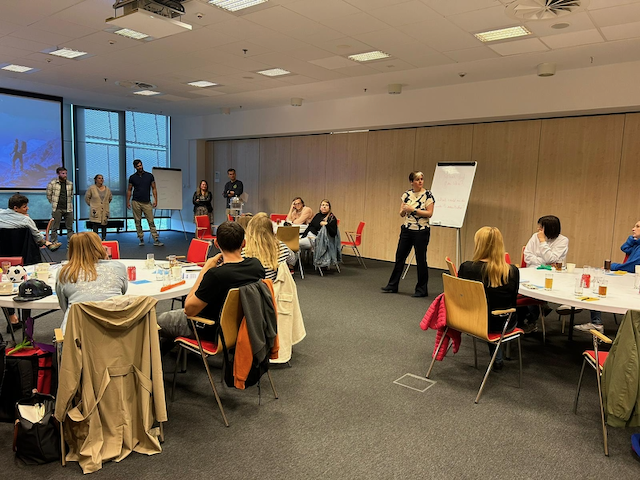
In 2022 I ran 136 virtual sessions.

I did not plan to learn what I did from that year. I thought I was delivering training. What I was actually doing, without quite naming it at the time, was watching the same patterns surface again and again across completely different teams, organisations, and topics.

The pattern that appeared most consistently was not about communication skills. It was about assumptions: the assumptions people carry about what good communication looks like, and the quiet pressure they put on themselves because of the gap between that image and what they actually do.

The clients often wanted the meatier topics. Challenging conversations, difficult feedback, high-stakes communication. And those matter. But what I kept observing was that the real difference was rarely made by the content of the session. It was made by smaller things.

One of those things was presence. Not mine as the facilitator, though that matters too. Everyone’s.

And by presence I do not mean high energy, or being visibly engaged, or performing enthusiasm. Some of the most present people in a room are the calm ones. The ones who observe carefully before they speak. The ones who ask the question no one else thought to ask. You need both in a team: the person who moves fast and the person who notices what the fast mover missed.

What I started asking, and still ask now, is: what is the energy you bring? Not as a judgement, but as genuine curiosity. Because when people understand their own energy and how to use it well, without burning themselves out trying to be something they are not, something shifts in how a group thinks and works together.

That understanding sits at the foundation of how I design my work now. Not the 136 sessions as a number, but what that volume of repetition made visible: the small things that consistently made a difference, and the structural patterns underneath all the variation.If I could say one thing to the version of myself running session one, it would be this: be present. It is over before you know it. And presence is not a nice-to-have. It is the work.
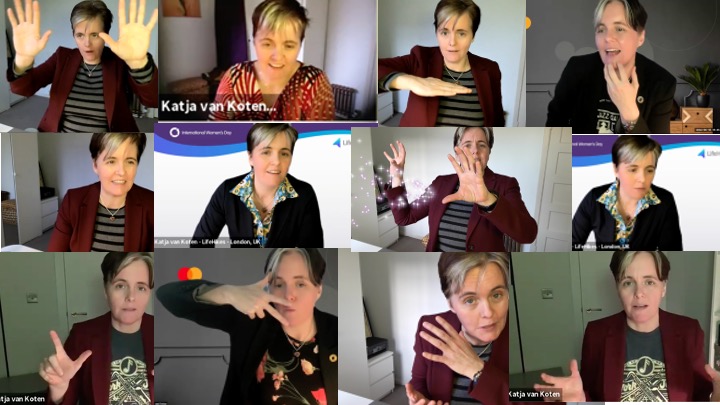

We have been taught that good eye contact signals confidence, builds trust, and shows you are listening. And there is something in that. But the story is more complicated than the advice suggests.

Oxytocin, the so-called cuddle hormone, is often cited as the reason eye contact builds connection. It does play a role. But its effects are more context-dependent than the self-help industry would have us believe. It works when there is already familiarity and safety. With strangers, or in high-stakes situations, sustained eye contact can increase anxiety rather than reduce it. The love hormone is more selective than advertised.

And yet we keep coaching people to hold eye contact as though it were a universal signal of presence.

Quality over quantity. It is one of my mantras, and nowhere is it more true than here. A moment of genuine eye contact at the right point in a conversation does more than sustained eye contact throughout. One feels like connection. The other can feel like pressure.

This matters particularly now. Many younger people have grown up with higher levels of social anxiety, and for them eye contact can feel genuinely difficult. Forcing it as a standard is counterproductive. It does not build presence. It builds performance.

Presence is not what your eyes are doing. It is whether your attention is actually there.

What signals presence to you in a conversation, if not eye contact?

For anyone curious about the research behind this:

On oxytocin and eye contact with familiar versus unfamiliar people: Frontiers in Endocrinology, 2021. https://www.frontiersin.org/journals/endocrinology/articles/10.3389/fendo.2021.629760/full

On the context-dependent effects of oxytocin and eye contact, including with strangers: Psychology Today. https://www.psychologytoday.com/us/blog/neuro-behavioral-betterment/202012/eye-contact-masks-biological-effects

On rising social anxiety in younger generations: Frontiers in Psychiatry analysis cited in All About Psychology. https://allaboutpsychology.substack.com/p/the-gen-z-stare

Jonathan Haidt’s The Anxious Generation has been one of those recently. It has sparked important conversations about young people, technology, and how our environments shape behaviour. One observation that stayed with me was his description of how children gradually disappeared from public spaces (the slow demise of the playground), and how much more life moved indoors.

Reading it prompted me to return to an earlier book of his: The Righteous Mind.

It was published quite some time ago, but it feels remarkably relevant when thinking about conversations, judgement, and how people change their minds.

One idea in particular stood out again. Haidt describes the relationship between intuition and reasoning through the metaphor of the elephant and the rider. The rider represents our reasoning mind, while the elephant represents our intuitive, emotional responses. We often assume the rider is in charge. In reality, the elephant usually moves first.

I’ve been using that metaphor for years when working with teams around challenging conversations. When someone is strongly in their emotions, trying to reason your way through the situation rarely works. The rider cannot simply force the elephant to move.

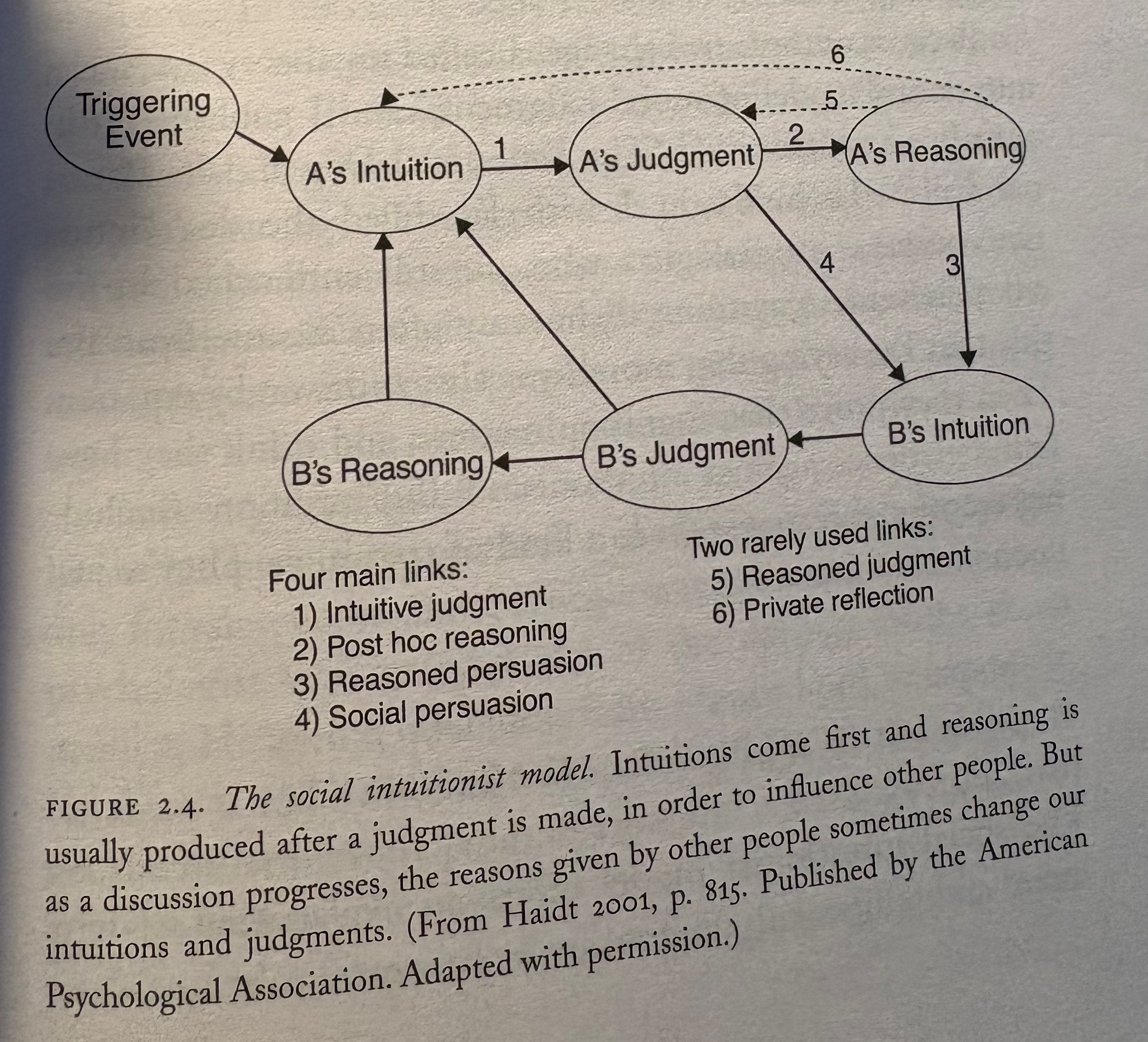
What I appreciated in The Righteous Mind is how much deeper Haidt goes. He describes how our initial intuitions shape our judgments almost instantly, and how reasoning often follows afterwards, mainly to explain or defend the conclusion we’ve already reached. But there is an important twist to this. Change rarely happens through private reasoning alone. It happens in conversation. Someone asks a question, someone offers a perspective we hadn’t considered, and gradually our intuition shifts. Only then does the rider follow.

That idea resonates strongly with what I often see in teams. Better decisions rarely come from individuals reasoning harder on their own. They emerge from conversations where people feel able to question assumptions, challenge thinking, and explore different perspectives together. In many ways, that is the work I describe as Better Thinking Together; creating the conditions where conversation can genuinely expand how people understand a situation. Which makes the quality of those conversations incredibly important. Because if we want better thinking in organisations, we don’t just need better arguments. We need better conversations.

The diagram in the book illustrates how judgement, intuition and reasoning interact in discussion.

I’m curious: when have you experienced a conversation that genuinely changed how you saw something?

Someone is talking, and I am listening. And then, somewhere in the middle, my attention shifts just slightly. Not dramatically. But something pulls at the edge of my focus, and by the time I realise it, the moment has already moved on.

It reminds me of that feeling when you pass someone you know in the street, they say something, and you laugh along even though you have no idea what they said. And then you pray they do not come back to it.

The instinct in those moments is to respond as though you have fully heard. Because stopping to say “I am not sure I caught that properly” feels awkward, especially mid-conversation, especially when you have already appeared to engage (and especially when you are in a hurry).

But here is what I have noticed. When that moment passes without being named, something small gets left unresolved. And the signal that it happened usually arrives a little later. Someone sends an email asking a basic question that should already be settled. Or, more telling still, they ask for a summary of what was decided at the end of the conversation.

That request, innocent as it sounds, is often an early sign that clarity did not fully land. Not because anyone was careless. Simply because the conditions for it to land were not there.

The subtlest sign that a group does not have shared clarity is usually not confusion. It is that things are not moving. Decisions hover. Energy stays flat. People wait without knowing what for.

Different words mean different things to different people. But sometimes the gap is not even about words. It is about whether attention was genuinely present long enough for understanding to form.

What is your earliest signal that something has not landed in a conversation?

After a conversation, a meeting, or a decision thread, most people would say things were clear. The discussion happened, contributions were made, and work moved forward.

But clarity and the feeling of clarity are not the same thing.

What I notice most often is not disagreement or confusion. It is something quieter: a slight difference in how people understood what was decided, what matters next, or who carries what forward. Small in the moment. Surprisingly expensive over time.

Last week I wrote about decisions holding, and about what happens when a cup fills faster than understanding can form. Both of those things trace back to the same starting point. Clarity is not a communication style. It is a structural condition. When it is built deliberately, decisions hold, work moves, and people do not need to keep returning to the same conversation. When it is assumed, the cost shows up later, in rework, in drift, in energy spent on questions that should already be settled.

It is the first phase of the work I design with teams, because without it, everything that follows is harder.

One small habit that makes a consistent difference: before closing a conversation, ask someone to summarise the decision in their own words. Different words mean different things to different people, and the gaps between versions are usually exactly where clarity has not yet landed.

I have been structuring my thinking on this more deliberately recently, and will be sharing more about what that looks like in practice over the coming weeks.

What do you notice most often: the moment clarity slips, or the point where its absence finally becomes visible?

One of the things I pay closest attention to in teams is not whether decisions are made, but whether they hold.

In many discussions, decisions appear clear in the moment. The conversation moves forward, people seem aligned, and work continues.

Yet the real test comes afterwards.

A decision that truly landed tends to move through the organisation with very little friction. People know what it means, what matters next, and where responsibility sits.

You can see it in the follow-through.

Work progresses without constant clarification, people move forward without reopening the same conversation, and energy carries into the next steps.

That usually happens when teams slow down just enough in the moment to make the decision explicit.

What exactly are we deciding? What does this mean in practice? And what happens next?

It sounds simple, but that small pause often makes the difference between a decision that merely sounded clear and one that genuinely becomes shared understanding.

Over time I’ve realised that many of the collaboration challenges organisations face can be traced back to the same starting point: clarity.

It’s something I’ve been paying closer attention to recently.

And when decisions truly land, something else becomes easier as well: momentum.

Thinking about the teams you’ve worked in, when have you seen a decision stay strong long after the conversation ended?

At the Samurai exhibition in the British Museum the other day, I noticed something interesting about how our minds absorb information.

It was fascinating; beautiful objects, rich history, detailed explanations. For a while I moved slowly from one display to the next, taking everything in.

And then, at a certain point, I felt something shift.

I realised my “cup” was full. The information was still interesting, but nothing new was really landing anymore. I was reading the panels and looking at the objects, yet my mind had reached its limit.

So I did what I often do in exhibitions: I bought the exhibition book. That way I can return to the material later and take it in properly, one small portion at a time.

It reminded me how often understanding grows through small shifts in attention rather than through adding more information.

I sometimes notice something similar in working conversations.

Ideas are shared, information builds, messages arrive, conversations move quickly. For a while everything is absorbed without difficulty.

But there comes a moment when the mind has taken in enough.

From that point on, adding more points rarely improves the quality of thinking. What often helps more is a short pause to absorb what is already there.

A moment to reflect, to summarise, and to clarify what has actually landed.

Because clarity is not only about what is said. It is also about whether people have had the space to take it in.

Most of us recognise that moment when we look back.

Thinking about the conversations you’ve been part of, when do you notice that moment when the “cup” is full?

It is not a personality trait, or the result of telling people to “take ownership,” and it certainly is not created by adding more process.

It emerges when the conditions around people are strong enough to support it.

When clarity is explicit rather than implied.
When hesitation is handled early instead of left to grow.
When thinking is genuinely collective rather than performative.
And when decisions are made in a way that allows them to hold.

Only then does agency become quiet.

In many teams, things move up the chain too quickly. Instead of being worked through where they start, they travel higher. Extra meetings are added to double-check. Before long, leaders are deciding things that never needed their involvement.

That is not a capability problem. It is structural.

In the way I structure my work, Quiet Agency sits in the fourth phase: Keeping Things Moving.

It rests on three foundations that come before it:
Clarity.
Handling Things Earlier.
Better Thinking Together.

Without those, agency feels risky.
With them, it becomes steady.

The teams that cope best with uncertainty are not the ones moving fastest. They are the ones where work continues without constant repair.

Where does work flow on its own, and where does it stall?

Not because there was a formal leader driving everything, and not because everyone agreed, but because everyone treated each other as capable of strong thinking.

People jumped in directly and built on each other’s ideas. You could hear it in the language. The word “and” showed up far more often than “but.” (try it: replace “but” with “and” in a conversation and notice how the energy shifts.)

Because of that, challenge did not derail the room. It strengthened it.

Someone would say, “Yes, and if we push that further…”
Another would respond, “I’ll take that part.”
And work moved.

No one waited to see if their idea was important enough. They just brought it in. What you felt in the room was contribution, not status.

I wasn’t the leader in those teams, and in many ways, there wasn’t one in the traditional sense. Everyone simply took responsibility for their part and moved with it.

That experience is what I describe as Quiet Agency.

Work continues between conversations, decisions hold, and responsibility is assumed rather than chased.

In the final phase of my work, Keeping Things Moving, this is what we are aiming for. Not louder accountability or tighter control, but agency that is steady enough to be almost invisible.

Where have you experienced that kind of flow?

Some silence signals avoidance.
Some silence signals thinking.

In the past, I have written about the kind that feels heavy. The meeting where everyone nods, the decision moves on, and something lingers in the air. That kind of silence creates distance and leaves clarity unfinished. It needs attention.

But there is another kind of quiet that we are often too quick to interrupt.

After speaking this week about presence, I have been reflecting on how quickly we rush to fill a gap in conversation. A question is asked. No one responds immediately. Within seconds, someone steps in to rescue the room by adding context, rephrasing the question, or softening the pause. Usually with good intention.

Yet when people are genuinely present, silence can signal that something is forming, not that something is wrong. It allows thinking to take shape rather than arriving half formed. It gives space to those who do not naturally interrupt. It creates the conditions for ideas to connect instead of collide.

Novel thinking rarely appears at full speed. It needs a moment.

The real challenge is knowing which silence you are sitting in. Is something being avoided, or is something still forming?

In the work I describe as Better Thinking Together, that distinction matters. Strong collaboration is not about constant contribution. It is about creating the conditions for thinking to deepen. That sometimes means protecting silence, and sometimes addressing it earlier.

Both require attention.
Both require presence.

When quiet shows up in your conversations, what helps you decide whether to lean in or let it breathe?