The real cost of low-energy teams isn’t morale. It’s weakened decisions.

Most teams don’t notice the shift at first. Conversations are still happening, there is visible agreement, and work continues. On the surface, everything appears steady.

But something changes in the texture of thinking.

Questions become safer. Challenges soften. Assumptions slip through because nobody quite wants to slow things down and examine them properly.

Nothing dramatic happens, yet decisions begin to lose strength.

They need revisiting, travel unevenly across the organisation, and create follow-up conversations that should not have been necessary in the first place.

Over time, that becomes expensive.

Not because people lack intelligence or experience, but because the conditions for strong thinking were no longer being protected early enough.

High-performing teams do not avoid disagreement. They take responsibility for the quality of their collective thinking and for the standards that protect it.

That is where Handling Things Earlier sits. Not escalating faster. Not reacting more quickly. But noticing misalignment while it is still light enough to work with.

Over nearly a decade of working with teams, I’ve seen how decision quality erodes through small, unexamined habits. I’m now shaping that experience into something more defined, and Handling Things Earlier sits at its centre.

Because what protects decision quality is rarely dramatic. It’s deliberate.

📆 Looking back at your own experience, where do things tend to be addressed later than they should be?


Over the years, I’ve come to treat energy as data, not as mood or personality, but as an indicator of how well the underlying structure is holding.

After conversations where clarity is genuinely shared, energy carries forward. People leave knowing what they are responsible for, what matters next, and where the boundaries are. Decisions move. Thinking builds. There is momentum without force.

When energy drops, it is usually pointing to something.

Often it signals that ambiguity hasn’t been fully worked through, that ownership is implied rather than explicit, that tension was noticed but not quite addressed. Nothing dramatic happens, yet something essential remains unresolved.

For a long time, I saw this pattern without fully articulating it. Recently, I’ve been shaping it more deliberately, mapping what consistently strengthens energy in teams and what quietly weakens it.

The pattern is remarkably consistent.

Energy rises when clarity is shared.
Energy holds when tension is surfaced early.
Energy fades when assumptions remain unexamined.

That understanding now sits at the foundation of how I design my work.

Because if you can read energy early, you can intervene early. And early shifts are almost always smaller, cleaner, and far less expensive than late corrections.

If energy were treated as data in your organisation, what might it be telling you?

On the surface, everything looks aligned.

The discussion has taken place, there is visible agreement, and the conversation moves on.

But if you stay with the (virtual) room for a moment longer, something else becomes noticeable.

Momentum feels heavier than it should.
Questions return a week later in slightly altered form.
Decisions that sounded settled begin to blur at the edges.

Nothing dramatic, just a subtle loss of sharpness.

Over time, that loss affects something far more important than mood.
It affects the quality of thinking.

When clarity genuinely lands, the shift is unmistakable.

The conversation tightens.
Ownership becomes specific rather than implied.
People build on each other’s ideas instead of circling back to the same point.

Energy rises, and with it, decision quality.

For years, I’ve paid close attention to that shift in energy. It’s one of the most reliable indicators of whether shared clarity has actually formed or whether alignment is only superficial. Lately, I’ve been structuring those observations more intentionally.

Energy is not about enthusiasm; it is about coherence.

And coherence is what allows strong thinking to travel.

Assumed clarity is one of the most expensive habits in teams.

What does the energy in your key conversations reveal about the clarity behind your decisions?

Shifts that keep things moving when work is already underway. Not big interventions or polished techniques, but the moments that quietly determine whether clarity holds or slips away.

There is a moment in some meetings where the air feels thick. Not because anyone is angry, and not because something has gone wrong, but because something needs to be said and has not been yet.

You can usually sense it. People hesitate. Someone looks down at their notes. Another person adds more detail than necessary, almost circling the thing instead of naming it. Everyone feels it, and everyone waits for someone else to go first.

It is not avoidance, and it is not a lack of skill. It is human.

Saying the thing slows the room down. It risks a bit of awkwardness and interrupts the flow, especially when time is tight and the meeting is already full. So the conversation keeps moving, while clarity stays unspoken. That is often where communication starts to drift.

What I have noticed is that when someone finally names what is sitting in the room, the tension does not increase. It releases. The energy shifts, people exhale slightly, and the conversation can actually begin.

Not because the words were perfect, but because the thing that needed saying was finally said.

Most communication problems do not come from what is said badly. They come from what never quite gets said at all. And that moment, when the air feels thick, is often the moment that matters most.

Where do you notice that pause most often? 🤔

What always struck me was how often communication could look excellent and still do very little.

A lot of my work sits right in that gap: when communication is polished, confident, and technically “good”, but does not actually shift understanding, decisions, or behaviour.

I’ve worked with leaders who were clearly trained in how to communicate well.
They asked good questions.
They listened attentively.
They summarised what others said.
They looked engaged and present.

On paper, it was all good communication.

And yet, very little seemed to stick.

I genuinely struggle to remember what was actually decided in those meetings.
Not because it was unclear in the moment, but because nothing really carried through afterwards.

We would leave with the sense that something productive had happened.
But no shared understanding of what had changed.
No clear direction.
No real follow-through.

It sounded right.
It felt professional.
But it did not seem to do very much.

That was the moment I stopped equating good delivery with effective communication.

Because communication is not effective because it is polished or well performed.
It is effective when it changes what people understand, decide, or do next.

Questions, summaries, and presence all matter.
But only if they serve clarity, intent, and shared assumptions.

Otherwise, communication becomes something we admire in the moment
and then quietly move on from.

Where do you most often see communication sound good, but fail to create real movement afterwards?

They are the ones I see most often when working with teams on communication, decision-making, and collaboration under pressure.

Not the visible conflict.
Not the heated disagreement.

The costly ones are the moments where nothing is said and people start “adapting”.

A decision is made, but not everyone is fully aligned.
So people adjust privately.
They cut corners.
They build in buffers.
They revisit decisions later “just to be sure”.

Nothing looks broken.
But momentum slows.
Time gets lost.
The same conversations keep resurfacing in slightly different forms.

Unspoken does not mean unnoticed.
It means people are filling in the gaps in different ways.

That’s why collaboration rarely breaks down all at once.
It wears down quietly, in the middle of the work, when assumptions drift and no one pauses long enough to realign.

One small shift that makes a real difference here is slowing down just enough to surface what’s underneath.
For example, asking:

  • What are we assuming?
  • What needs a bit more clarity still?
  • Before we move on, what are we not fully aligned on yet?

Not to reopen everything.
Just to stop everyone carrying a slightly different version forward.

This is the kind of friction I see most often when working with teams.
Not dramatic moments.
But the quiet, cumulative drag that shows up in time lost, rework, and decision fatigue.

Pausing for clarity can feel inefficient in the moment.
But it is often what prevents much bigger costs later.Where do you see quiet friction slowing things down most often?

My work focuses on helping people communicate with clarity and consistency so collaboration doesn’t get harder than it needs to be.

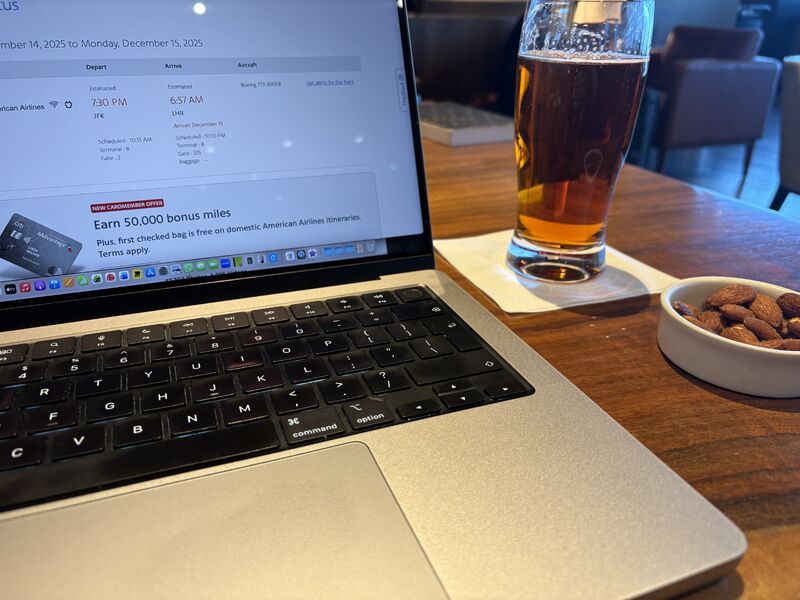
At 10:15 this morning, we should have been in the air from JFK.
At 13:00 we were still on the ground when the announcement came.
Two hours sitting on the plane, only to be told we had to get off again.
We were now too late and Heathrow would be closing.
New departure time: 7:30pm 😳

So here I am, writing a LinkedIn post from the middle of it all, to be posted between Christmas and New Year, when most people are busy reflecting or looking ahead.

This is what being in the middle of things feels like.

Not at the start.
Not at the end.
Plans already in motion, momentum interrupted, no clean reset.

This is also where adaptability quietly comes into play.
Not as a big pivot, just a small adjustment to what’s already unfolding.

In storytelling there’s a technique called in medias res.
It means starting in the middle of the action.

That’s where most work actually happens too.

Projects are already underway.
Conversations have history.
Decisions didn’t start today.
People join with different pieces of context.

Reflection looks back. Looking ahead looks forward.
Most communication friction shows up when we ignore where we actually are.

One small habit that helps in these moments is simply naming the middle.
“Here’s where we are right now.”
“Here’s what’s already in motion.”
“Here’s the context I’m working with.”

It doesn’t fix everything.
But it creates just enough shared clarity for collaboration to move forward instead of looping.

Where have you noticed things getting harder simply because nobody named that you were already in the middle?

Talent, Teams and Tiny Behaviours
Much of my work centres on helping people communicate with more clarity and consistency so collaboration becomes easier and more human.
These ideas show up in the books I return to, especially when they help explain what actually shapes our day-to-day behaviour.
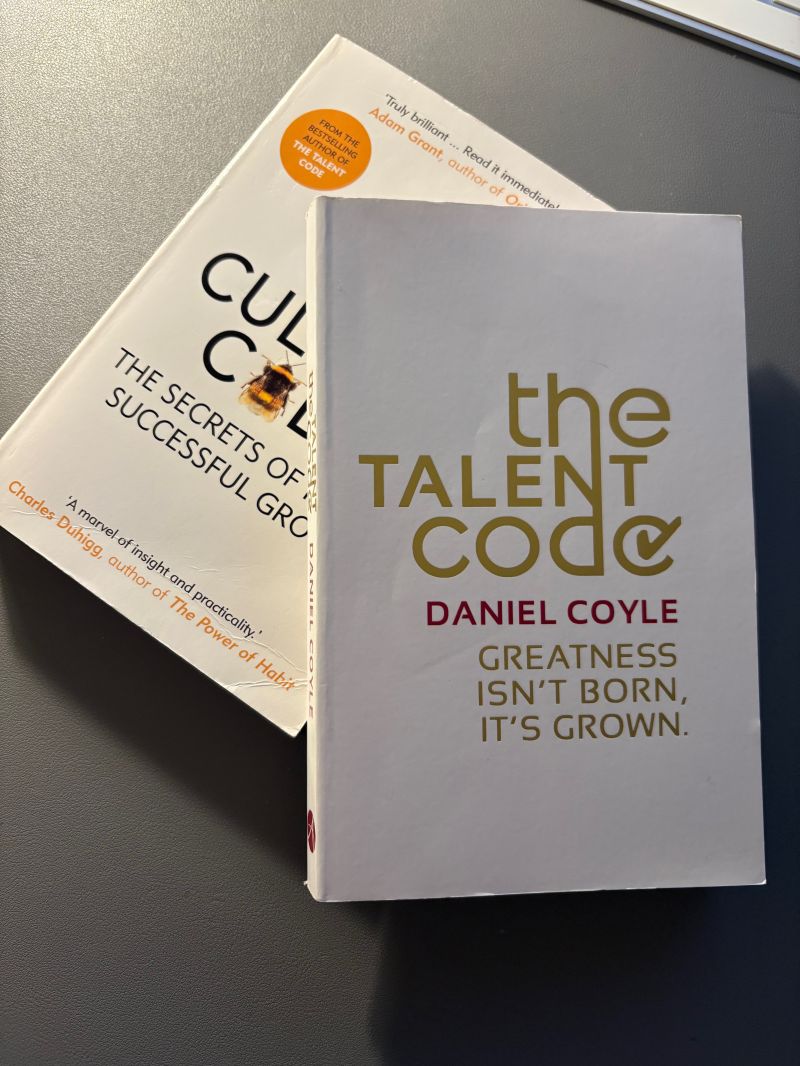
Most people know Daniel Coyle for The Culture Code, but The Talent Code is the one that made me pause and think about how we grow not just as individuals but as teams.

Coyle explains how the brain strengthens skills through myelin 🧠. Myelin is the insulation that wraps around neural pathways. When we repeat a behaviour with intention, those pathways fire more quickly and more reliably. In other words, the brain becomes more efficient at what we practise most.

What struck me is how similar this is to collaboration.

Teams build their own pathways in how they speak, listen, question and align. When those behaviours are repeated consistently, collaboration becomes smoother not because of one big moment but because of the accumulation of many small ones.

This is why I talk so much about micro-habits.
Small shifts. Real change. 🌱
It is not a slogan. It is how people learn and how teams strengthen the way they work together.

And to bring it full circle, The Culture Code is also worth reading, especially for the small leadership signals that build belonging and psychological safety. These are the foundations that make collaboration possible.

Where have you seen small, repeated behaviours strengthen how people work together?

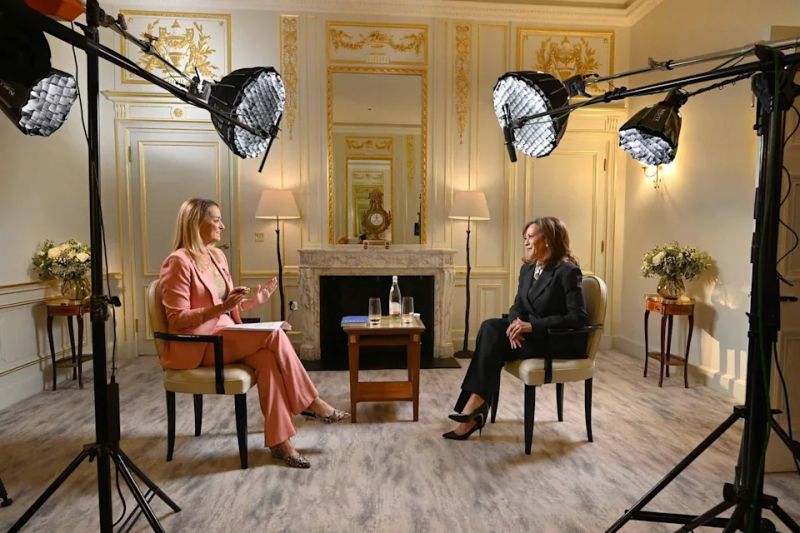
A few weeks ago, Kamala Harris was interviewed in London.
At one point, she was interrupted several times.
She didn’t raise her voice or rush her words.
She simply said, “Let me finish.” And paused.

Calm. Clear. Certain.

It wasn’t the first time; back in 2020, during the Vice-Presidential debate, she did something similar: “Mr Vice President, I’m speaking.”
Different moment, same presence.
She stood her ground: respectfully, firmly, and with grace.

That’s the power of consistency and that’s where trust begins.
When people see you show up with the same steady tone, the same clarity, the same calmness (even under pressure) they know what to expect from you.

And that’s often when it matters most in moments of tension.
When voices overlap, deadlines tighten, or opinions clash, consistency becomes a form of trust.
It signals safety, reliability, and respect, the sense that “we can disagree, but we’ll get through this together.”

The same is true in how we work, communicate, and collaborate every day.
When someone listens, follows through, or keeps their voice level even when discussions heat up, others lean in instead of tuning out.
Trust isn’t built in big moments, it’s earned through small, repeated micro-habits that show reliability over time.

In the framework I’ve been sharing (S for Small, H for Hook, I for Intentions, F for Flexibility, and now T for Trust) every shift adds up.
Because real collaboration starts when people feel steady in each other’s presence.

💡 What small, consistent actions build trust in your meetings or team?

#Communication #LeadershipDevelopment #Trust #Consistency

KoConsultancy Katja van Koten SHIFT 25

I recorded this right after a training in Lisbon just outside the castle, in a quiet corner away from the crowds.

https://youtube.com/shorts/tmVTLWgsuLg?feature=share

It reminded me how much the small things matter in communication.
Choosing a calm spot. Checking the light and sound. Taking a breath before you begin.

Over the past few weeks, I’ve been sharing moments from the framework I’m developing (Small shifts, Hooks, and Intentions) the micro habits that make communication stick.
This week, it’s about Flexibility: not just how we adapt our tone, timing, or style, but how we prepare to show up.

Because the way we set ourselves up before we speak often shapes how clearly others hear us.

💡 How do you prepare yourself or your space before an important meeting or presentation?

(And yes next week, we’ll reach the final letter 🙂)

#Communication #LeadershipDevelopment #Flexibility